Amendment 15 – Spatial Management – Not Traditional Fish Management
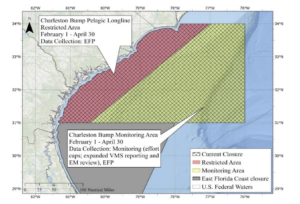
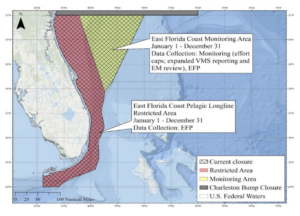
On April 3, 2026, the National Marine Fisheries Service (NMFS) implemented Amendment 15, which opened Closed Zones to pelagic longline fishing off the East Coast of the United States. With these zones having been successfully closed for over 20 years, TBF has been vehemently fighting its implementation for the past two years. Despite what TBF considers fatal flaws in the proposal process based on methods used in the Amendment, it will now manage Atlantic highly migratory fish. Based on this, we at TBF are now anticipating a significant increase in fishing restraints within designated waters.
Historically, traditional fishery management depends on agency fish scientists, landing data, and stock assessments, whereas the replacement strategy, spatial management, will now designate waters based on where fish may be found as opposed to where fish have been previously caught. For those unfamiliar, spatial management depends on a combination of environmental factors and observer data, even when vessels do not carry observers. Spatial management strategies would then use the available data to generate models of future predictions.
From a legal perspective, TBF views the Amendment process as arbitrary and capricious. Overly technical and complex, the 598-page Amendment was not comprehensible by members of the public, a basic responsibility of the agency. From TBF’s perspective, NMFS should rewrite the Amendment at the very least, allowing the public to fully understand what is at stake.