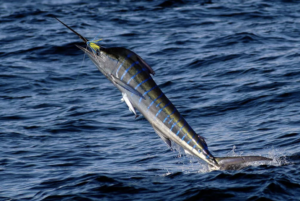
The Billfish Foundation is pleased to highlight a new scientific publication now featured in our Research Library: “Rapid Elemental Profiling for Species Identification of Marlin.”
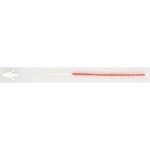
Authored by Patrick J. Burke, Kyle Zawada, Tristan Guillemin, Julian Pepperell, and Jane E. Williamson, this innovative study explores a promising new method for identifying marlin species using portable X-ray fluorescence (pXRF) technology. Rather than relying solely on traditional genetic testing, researchers analyzed the elemental composition of marlin anal fin spines to determine whether black, blue, and striped marlin could be distinguished quickly and accurately.
View publications
The results are encouraging. Researchers found that each species possesses a unique elemental “fingerprint,” with blue marlin showing especially distinct profiles. Because pXRF is portable, non-destructive, and capable of producing results within minutes, the technology has the potential to become a valuable complement to genetic testing in fisheries monitoring and conservation.
Accurate species identification plays a critical role in improving stock assessments, reducing misidentification, supporting fisheries management, and strengthening conservation efforts for billfish around the world. While additional research is needed before widespread implementation, this study represents an exciting step toward faster, more accessible tools for fisheries science.
We congratulate Patrick J. Burke, Kyle Zawada, Tristan Guillemin, Julian Pepperell, and Jane E. Williamson on this important contribution to billfish research and conservation.
Have a Billfish Publication to Share?
The Billfish Foundation is proud to maintain a growing library of scientific research dedicated to billfish and related pelagic species. If you have recently published research that would benefit the billfish community, we’d love to feature it on our website.
Please send your publication to [email protected] for consideration and help us continue sharing the latest advancements in billfish science with anglers, researchers, and conservationists worldwide.