April 8, 2026

“WE HAVE THE TAG!” – A Real-Time Race to Recovery in Fort Pierce

What started as a drifting satellite ping quickly turned into a full-scale, real-time collaboration—one that unfolded email by email, hour by hour, and ultimately ended with a message everyone was hoping to see, “WE HAVE THE TAG!”

Earlier this year, as part of The Billfish Foundation’s (TBF) Groundswell Project, the Southern Florida Sailfish Initiative, a team of scientists, anglers, and TBF staff were able to successfully deploy five pop-off satellite tags near Palm Beach, Florida. In partnership with Fish Bluewater, five sportfishing vessels (Native Son, Sandman, Old No. 7, Princess Lily, Valhalla 55 Demo) contributed their time, resources, and experience to make this research expedition a resounding success.

Unfortunately, not every deployment goes according to plan. One satellite tag popped off prematurely after approximately two weeks and began drifting north, eventually settling near Fort Pierce, FL. Still transmitting, the tag represented both a problem and an opportunity. Recovering it could unlock higher-resolution data, help diagnose the early release, and allow for potential redeployment. But time was limited. Once the battery died, the tag would be nearly impossible to recover. The tag had already been drifting for over two weeks, and with battery life dwindling, every transmission mattered.

TBF quickly mobilized its network, sharing real-time updates and calling on the community for help. What followed was an incredible show of support. Anglers, captains, and partners joined the search, each offering speculation and theories as to how best approach this search-and-rescue mission. Ingestion via a shark was even a leading theory for a short time. 

Then came the turning point. On Thursday, March 19, an email from Dr. Matt Ajemian of the Fisheries Ecology and Conservation (FEC) Lab at Florida Atlantic University’s Harbor Branch Oceanographic Institute in Ft. Pierce read, “We are just up the road… we have satellite tag recovery equipment and can assist if need be.” Sold!

Using a goniometer, an instrument capable of detecting and triangulating the tag’s signal, the Harbor Branch team would be in the best position to make retrieval possible. Within hours, TBF and research partners were aligned. Coordinates were shared. Calls were scheduled. Tag specifications, color, model, and signal frequency were exchanged. A plan was forming in real time.

By the next morning, the Harbor Branch team was already mobilizing. Early signs were promising, with strong signal hits suggesting they were close. But then, just as quickly, the signal dropped. The search paused, but the effort didn’t.

Teams needed to regroup and discuss next steps. Was the battery fading? Were transmissions limited? Was the tag buried somewhere? The leading theory suggested the tag was deep within the mangrove shoreline, but without a clear signal, it would be impossible to find.

By Monday, the collaboration intensified. Reanalyzing the data and transmission timing patterns, the recovery team, led by FEC Lab Research Coordinator and Ph.D. student Mike McCallister, identified that specific morning transmission windows offered the best opportunity to retrieve the tag. Armed with this new strategy, the Harbor Branch team prepared for one more attempt timed precisely with the tag’s strongest signal periods and favorable tide conditions.

On Tuesday morning, with refined coordinates and a clearer understanding of the tag’s behavior, the Harbor Branch team headed back out to the inlet. Based on the signal, it was confirmed that it had drifted into a complex mangrove environment, hidden among debris and shifting wrack lines. Based on the location, it was also confirmed that the tag wasn’t floating; it was buried.

After combing through the wrack line and mangrove roots, and swatting away mosquitoes and no-see-ums, the breakthrough came. “The goniometer signal kept bouncing back and forth, pointing in all directions, so we knew the tag had to be very close to where we were standing,” said McCallister. Then, almost by chance, FEC graduate student Cecilia Hampton happened to look down and realized she had been standing directly over the tag; in fact, the team had accidentally walked over it multiple times without realizing it. “I looked down where I was standing, and there it was, right next to my foot! I was barely able to see the tag’s antennae poking through the mangrove roots,” recalled Hampton. Partially buried beneath debris and wedged into the mangrove roots, the black satellite tag with its bright colored paint completely worn away, had been nearly invisible, overlooked multiple times before finally being uncovered.  Moments later, the email came through:

“WE HAVE THE TAG!”

This was not just a technical win, but a testament to what’s possible when scientists, anglers, and the broader community come together with a shared goal. What could have been a lost opportunity instead became a story of coordination, determination, and collective effort. From TBF coordinating updates, to scientists sharing data in real time, to the Harbor Branch team physically searching the mangroves, this was a true collaboration in real time.

We at TBF would like to extend our sincere thanks to everyone who helped track, search for, and share information about the tag, especially the Harbor Branch team for their hands-on dedication in Fort Pierce. This is what conservation looks like in action.

With the tag now recovered, TBF looks forward to analyzing the data and continuing to build on the momentum of the South Florida Sailfish Initiative, one tag and one collaboration at a time.
What started as a drifting satellite ping quickly turned into a full-scale, real-time collaboration—one that unfolded email by email, hour by hour, and ultimately ended with a message everyone was hoping to see, “WE HAVE THE TAG!”

Earlier this year, as part of The Billfish Foundation’s (TBF) Groundswell Project, the Southern Florida Sailfish Initiative, a team of scientists, anglers, and TBF staff were able to successfully deploy five pop-off satellite tags near Palm Beach, Florida. In partnership with Fish Bluewater, five sportfishing vessels (Native Son, Sandman, Old No. 7, Princess Lily, Valhalla 55 Demo) contributed their time, resources, and experience to make this research expedition a resounding success.

Unfortunately, not every deployment goes according to plan. One satellite tag popped off prematurely after approximately two weeks and began drifting north, eventually settling near Fort Pierce, FL. Still transmitting, the tag represented both a problem and an opportunity. Recovering it could unlock higher-resolution data, help diagnose the early release, and allow for potential redeployment. But time was limited. Once the battery died, the tag would be nearly impossible to recover. The tag had already been drifting for over two weeks, and with battery life dwindling, every transmission mattered.

TBF quickly mobilized its network, sharing real-time updates and calling on the community for help. What followed was an incredible show of support. Anglers, captains, and partners joined the search, each offering speculation and theories as to how best approach this search-and-rescue mission. Ingestion via a shark was even a leading theory for a short time. 

Then came the turning point. On Thursday, March 19, an email from Dr. Matt Ajemian of the Fisheries Ecology and Conservation (FEC) Lab at Florida Atlantic University’s Harbor Branch Oceanographic Institute in Ft. Pierce read, “We are just up the road… we have satellite tag recovery equipment and can assist if need be.” Sold!

Using a goniometer, an instrument capable of detecting and triangulating the tag’s signal, the Harbor Branch team would be in the best position to make retrieval possible. Within hours, TBF and research partners were aligned. Coordinates were shared. Calls were scheduled. Tag specifications, color, model, and signal frequency were exchanged. A plan was forming in real time.

By the next morning, the Harbor Branch team was already mobilizing. Early signs were promising, with strong signal hits suggesting they were close. But then, just as quickly, the signal dropped. The search paused, but the effort didn’t.

Teams needed to regroup and discuss next steps. Was the battery fading? Were transmissions limited? Was the tag buried somewhere? The leading theory suggested the tag was deep within the mangrove shoreline, but without a clear signal, it would be impossible to find.

By Monday, the collaboration intensified. Reanalyzing the data and transmission timing patterns, the recovery team, led by FEC Lab Research Coordinator and Ph.D. student Mike McCallister, identified that specific morning transmission windows offered the best opportunity to retrieve the tag. Armed with this new strategy, the Harbor Branch team prepared for one more attempt timed precisely with the tag’s strongest signal periods and favorable tide conditions.

On Tuesday morning, with refined coordinates and a clearer understanding of the tag’s behavior, the Harbor Branch team headed back out to the inlet. Based on the signal, it was confirmed that it had drifted into a complex mangrove environment, hidden among debris and shifting wrack lines. Based on the location, it was also confirmed that the tag wasn’t floating; it was buried.

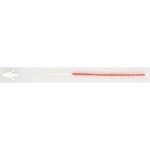
After combing through the wrack line and mangrove roots, and swatting away mosquitoes and no-see-ums, the breakthrough came. “The goniometer signal kept bouncing back and forth, pointing in all directions, so we knew the tag had to be very close to where we were standing,” said McCallister. Then, almost by chance, FEC graduate student Cecilia Hampton happened to look down and realized she had been standing directly over the tag; in fact, the team had accidentally walked over it multiple times without realizing it. “I looked down where I was standing, and there it was, right next to my foot! I was barely able to see the tag’s antennae poking through the mangrove roots,” recalled Hampton. Partially buried beneath debris and wedged into the mangrove roots, the black satellite tag with its bright colored paint completely worn away, had been nearly invisible, overlooked multiple times before finally being uncovered.  Moments later, the email came through:

“WE HAVE THE TAG!”

This was not just a technical win, but a testament to what’s possible when scientists, anglers, and the broader community come together with a shared goal. What could have been a lost opportunity instead became a story of coordination, determination, and collective effort. From TBF coordinating updates, to scientists sharing data in real time, to the Harbor Branch team physically searching the mangroves, this was a true collaboration in real time.

We at TBF would like to extend our sincere thanks to everyone who helped track, search for, and share information about the tag, especially the Harbor Branch team for their hands-on dedication in Fort Pierce. This is what conservation looks like in action.

With the tag now recovered, TBF looks forward to analyzing the data and continuing to build on the momentum of the South Florida Sailfish Initiative, one tag and one collaboration at a time.
Get on Board

Get up to date information on events, news, and research on a constant basis. Submit your email now to join our exclusive newsletter.

Share this Story

Latest News

Shop TBF

TBF Yeti Slim Can Cooler
$25.00
TBF Yeti Hotshot Bottle
$30.00
Billfish Foundation Tags
$24.00
TBF Signature Rope Hat
$35.00

Upcoming Events

Recent News

Exploring the Depths of Conservation: Dive into the latest updates and insights from The Billfish Foundation. Discover engaging stories and pioneering research in our ongoing commitment to marine preservation.

Interested in Learning More?

TBF provides a voice for billfish conservation and the recreational fishing community globally.
Our success would not be possible without the support of our community. Review the ways you can support our efforts.
TBF fosters strong billfish conservation ethics, helping anglers of all generations understand the importance of the recreational sportfishing industry and billfish

Get on Board

Join our Newsletter

Get up to date information on events, news, and research on a constant basis. Submit your email now to join our exclusive newsletter.

Explore Our Socials

Search TBF

Important Deadlines